Publications
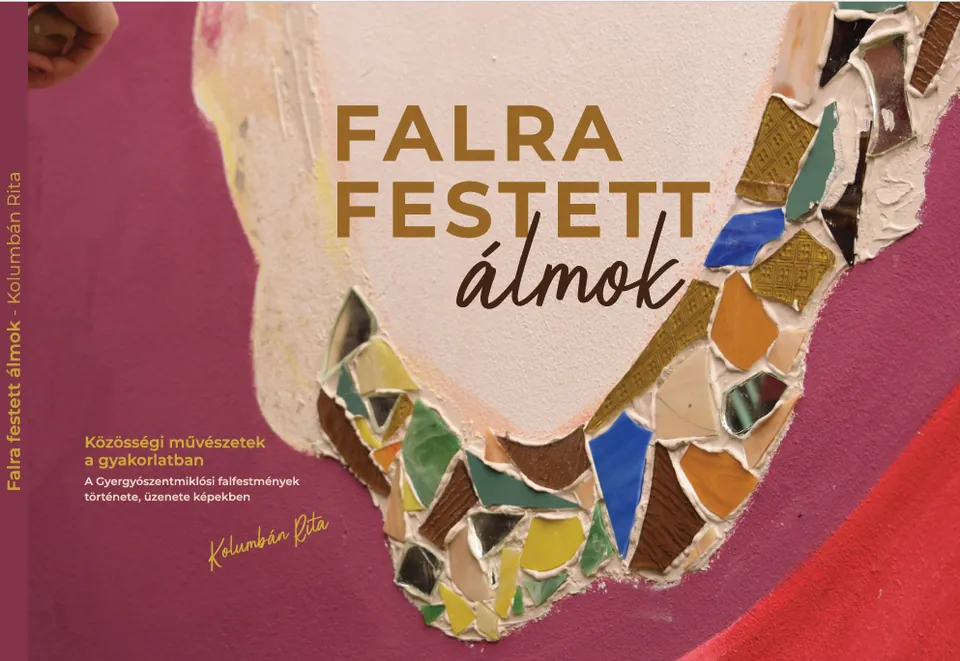
Studies on community murals as a tool for community-building and self-discovery — the method's history, methodology and application in Transylvania — together with the "Falra festett álmok" album.
Album
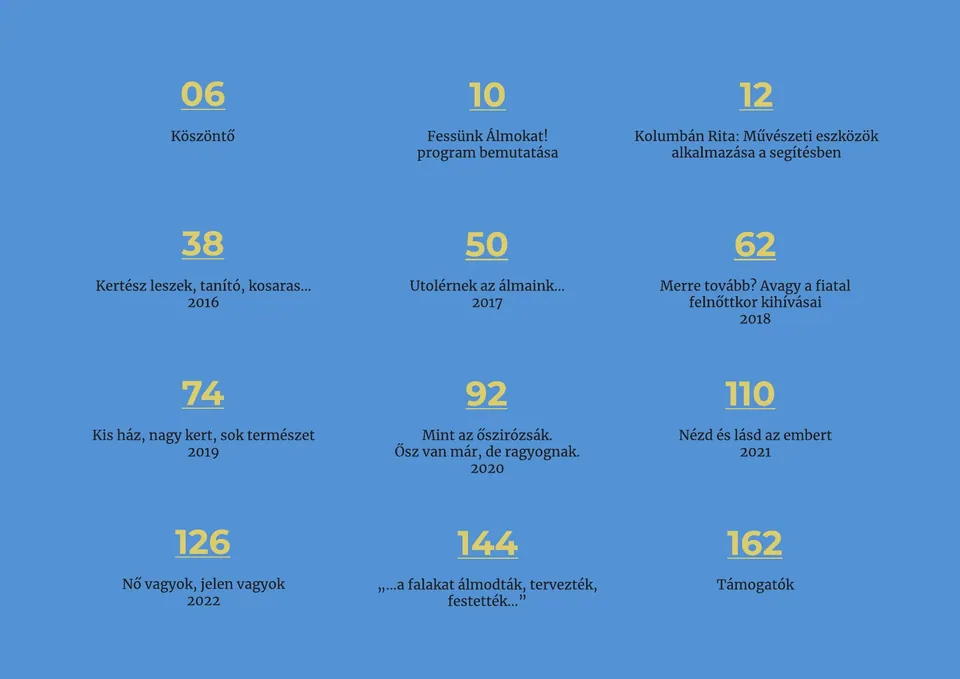
An album presenting the programme's ten years and the theoretical background of community arts. Flip through it here, or open the complete, 164-page album.
Studies
This study examines how collaboration among helping professionals affects the way mental-health-oriented group activities are led. The full volume is available from the publisher of Babeș–Bolyai University (Presa Universitară Clujeană); the author's chapter can be found on pages 391–412.
The mental-health perspective and the protection of psychological well-being are an important cornerstone of many social services. This research sets out to understand how mental-health-oriented group activities take shape within the Hungarian social-care network in Transylvania — what types exist, and who carries them out and how. The study presents partial results from a research project examining 240 services (Erdélyi Társadalom, 18(1), 2020).
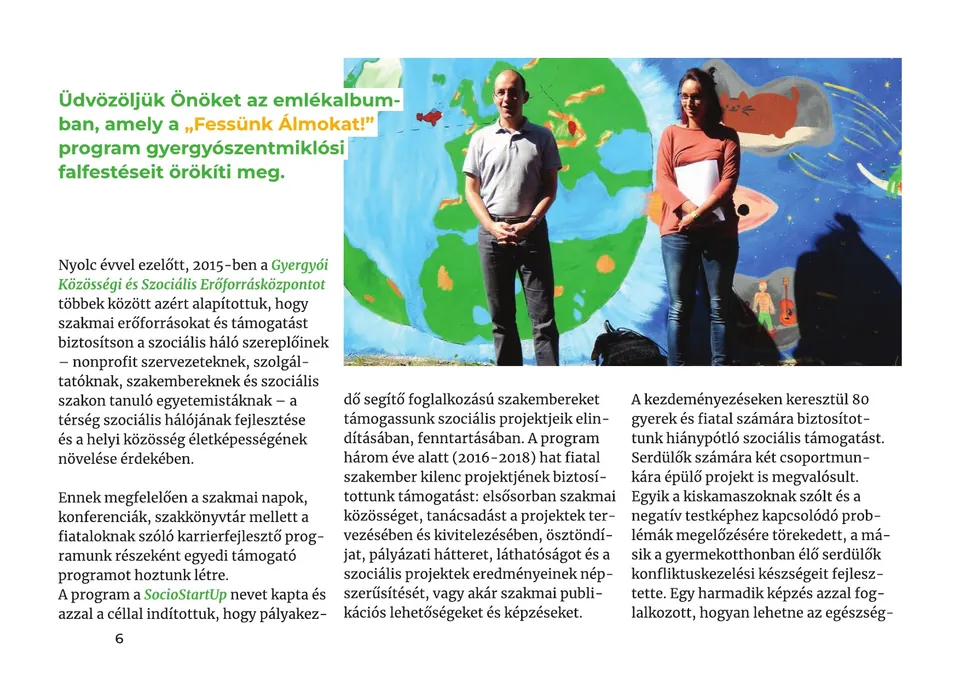
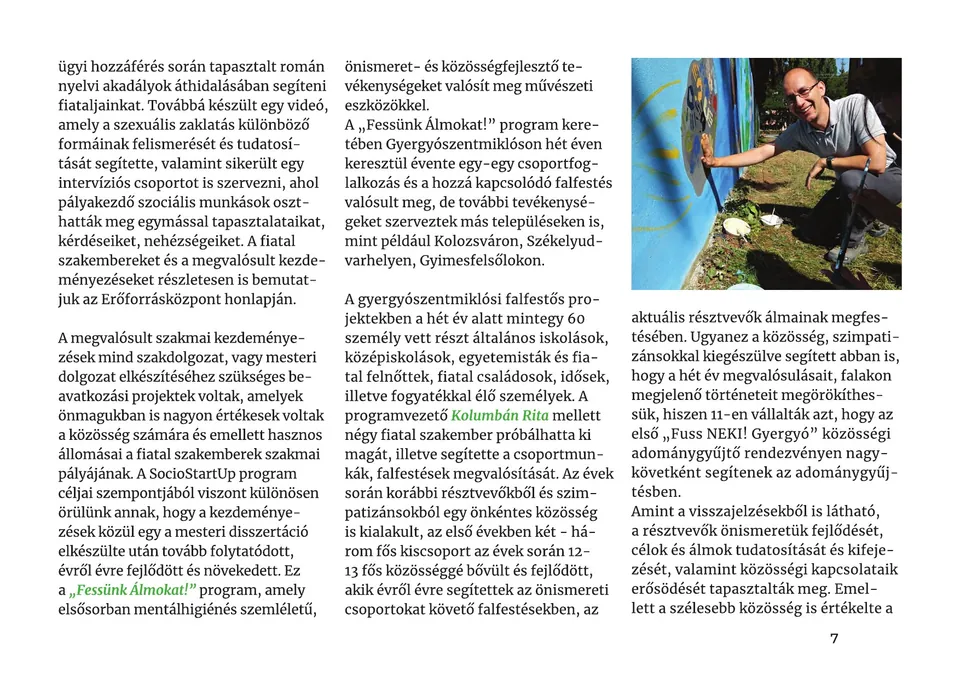
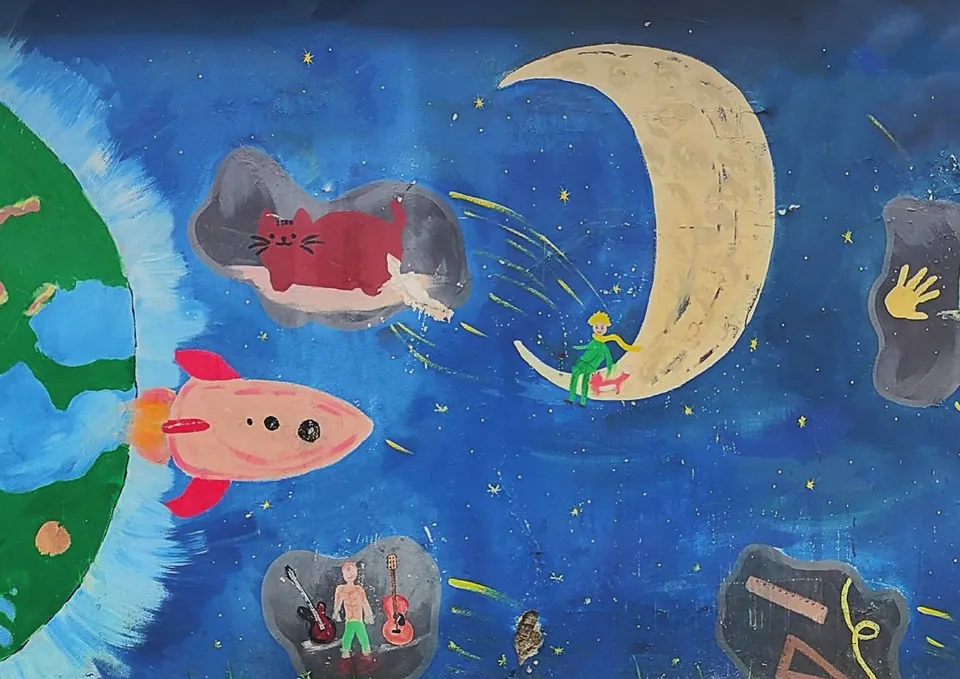
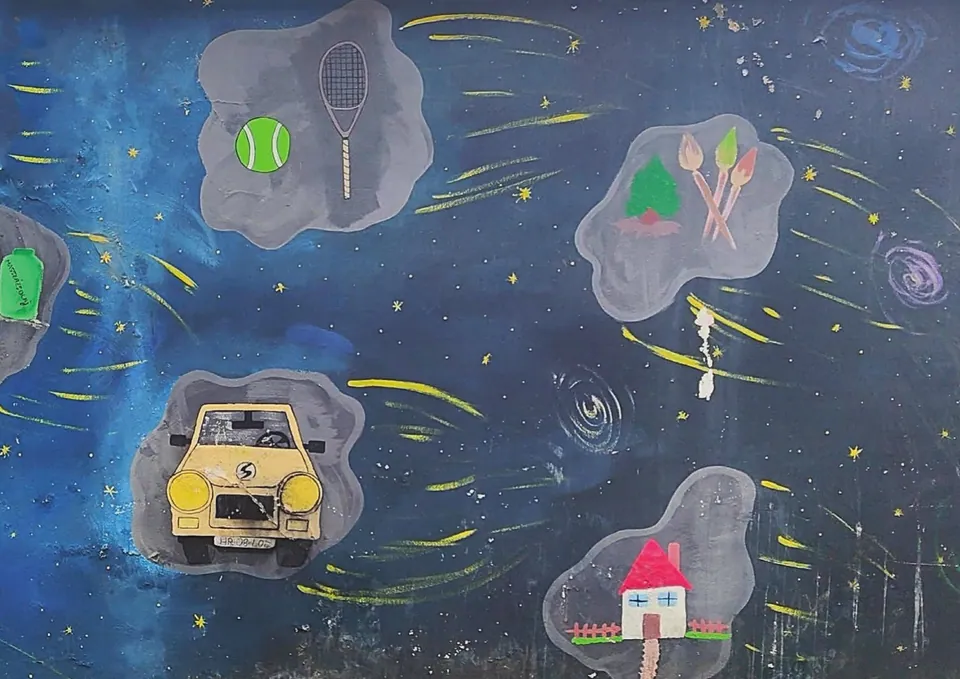
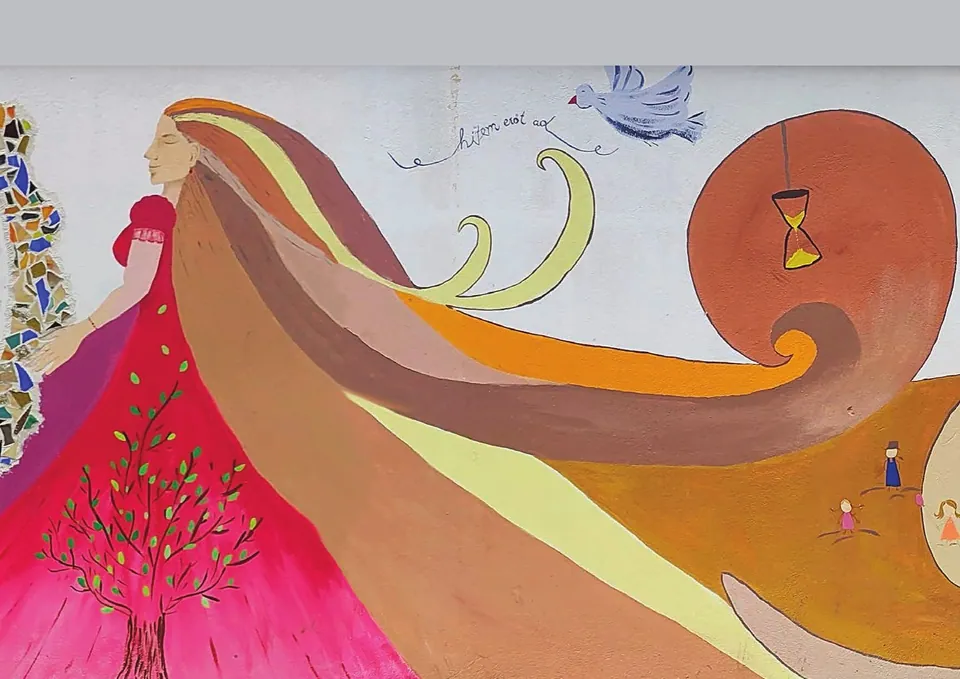
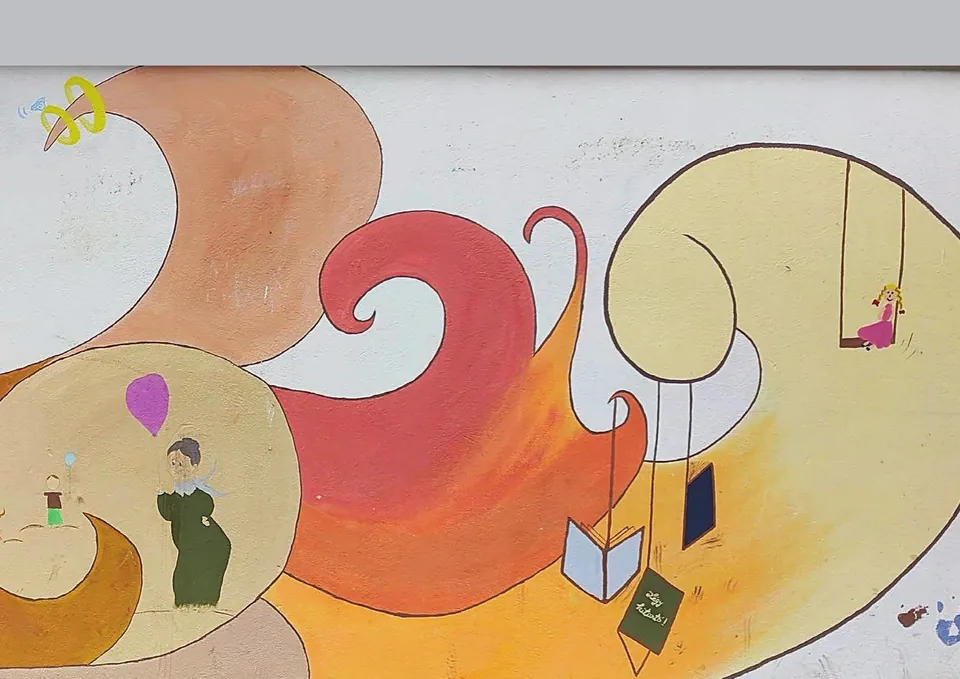
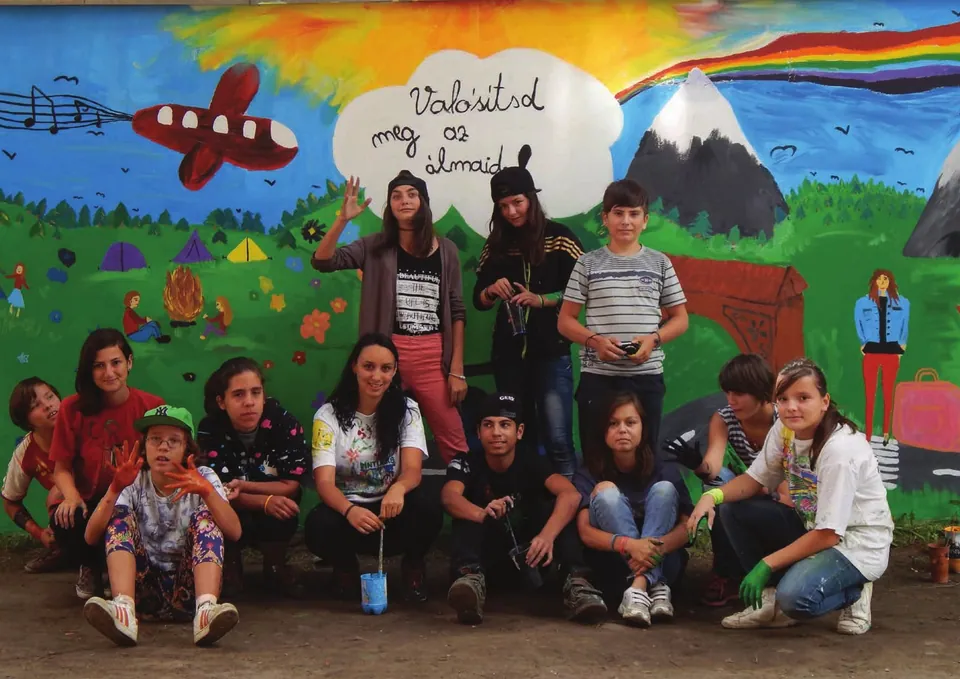
A publication presenting the murals created by the Fessünk Álmokat program between 2016 and 2019. In this program, built on the Pécs-based Mural Moral method, painting is a means, not an end: what is truly at stake is community building and self-discovery work. Across its pages you can follow how the message and the palette change from one age group to another.
This study examines the effects of the community mural painting (wallpainting) method, from the individual to the community. It shows how the journey leads from articulating individual dreams and desires to a shared message, and what micro-level (individual) and macro-level (community) changes the process sets in motion.
With the help of community arts — and especially collaborative mural painting — a community's shared system of values can be brought to the surface and made visible. This study explores how creating together makes tangible and shareable everything that truly matters to a group.
Published in issue 2017/7 of Keresztény Szó, this piece offers an accessible introduction to community mural painting as a tool for shaping community. The author writes about how creating together fosters connection, self-expression, and a community's sense of togetherness.
This study presents community mural painting as a method of community building: where it comes from, how its methodology is structured, and how it made its way to Transylvania. In the Murál Morál method, which has its roots in Pécs, painting is a means, not an end — what is truly at stake is working through and understanding a community's problems together. The article traces the development of the method and the projects realized in Transylvania.
Contact